Britain needs a constructive relationship with the European Union. Both those who voted Leave and those who voted Remain can agree on that. It needs reliable and easy trading arrangements, cooperation against organised crime and human trafficking, and close partnerships with countries facing the same security threats. None of that requires treating Brexit as unfinished business or making European integration the organising purpose of government. We can have a practical, bilateral dialogue with the EU as an independent nation.
Scrutinise the Costs, Not Just the Benefits
The summit on 20 November produced agreements covering food and agricultural trade, emissions trading and opportunities for young people. These deserve scrutiny on their merits and, importantly, on their costs, as any new deal would. Reducing unnecessary paperwork can help businesses, and cooperation with our neighbours is sensible, but given that most of that paperwork is now digital and automated, one must question how much of a burden is really being removed. Any agreement that removes friction also creates obligations, such as the new participation fee that the UK is forced to pay to deliver deals. Ministers must explain those obligations as clearly as they advertise the benefits, and be honest about them and what they mean for our country and the control of certain policy areas.
Respecting the North
The distinction between practical cooperation and reopening Britain’s constitutional relationship matters particularly in northern England. The North is neither politically uniform nor permanently Eurosceptic. Nevertheless, many northern communities supported leaving the EU, and their decisions cannot reasonably be dismissed as an inconvenience to be managed until a different settlement becomes possible. Respect requires engaging with their concerns about accountability, economic security and who exercises power. Parts of the North East, for example, wanted a freeport to incentivise investment and drive growth. Instead of tinkering with deals with the EU, the Chancellor should work with the Business Secretary to announce a new wave of special economic zones and freeports around the country to target investment, create jobs and have a meaningful impact on local and national growth that would really make a difference to everyday lives.
Reindustrialisation or Rejoining?
Those concerns extend beyond Europe. People judge government through wages, housing, public services and the condition of their neighbourhoods. A diplomatic announcement means little to someone whose town centre feels unsafe, whose employer faces unaffordable energy costs or whose journey to work is unreliable. Any reset must therefore be assessed against the domestic improvements it helps deliver. Unfortunately, the deal negotiated with the EU appears to have significant costs, a loss of control over policy and no guaranteed benefits. Burnham, given his association with northern England and regional government, faces a particular expectation that he will understand this. The challenge is to demonstrate that international negotiations serve places that have repeatedly heard promises of renewal. Northern manufacturers and exporters may benefit from easier European trade. That possibility should be acknowledged. But the Prime Minister is set to spell out his ten-year vision, which will be focused on reindustrialisation, at the same time as he has opened the debate on the EU. Inside the EU, state aid rules prohibit government intervention and subsidy for industry, yet both will be important in delivering reindustrialisation. The Prime Minister will need to decide which is the priority: Reindustrialising Britain or taking us back into the expensive confines of the EU.
Devolution, Not Handing Power to Brussels
The food agreement illustrates the trade-off. The government says a common sanitary and phytosanitary area will remove substantial certification requirements and checks, with application planned from March 2028, subject to the necessary procedures. Those changes could help exporters and reduce costs. The evidence is that food costs are unlikely to be affected, but we will be passing the authority to decide policy to the European Union, over which we will have no control or influence. The Prime Minister spoke of Manchesterism, of passing power and control down to communities and devolving power to regions to accelerate growth. The Housing Secretary is charged with that responsibility. How does devolution square with handing power up to Brussels, which is unaccountable to the British people? The Housing Secretary should be empowered to hand powers down, instead of the government handing powers to Brussels.
Delivery Matters More Than Diplomacy
There is a further distinction between promising economic renewal and delivering it. International agreements can support growth, but they cannot substitute for functioning planning systems, investment in skills, reliable transport or competent public administration. If the public hears more about the next stage of European negotiations than about improvements in everyday life, the government risks appearing absorbed by an argument many people hoped was settled.
Cleaning Up the High Street
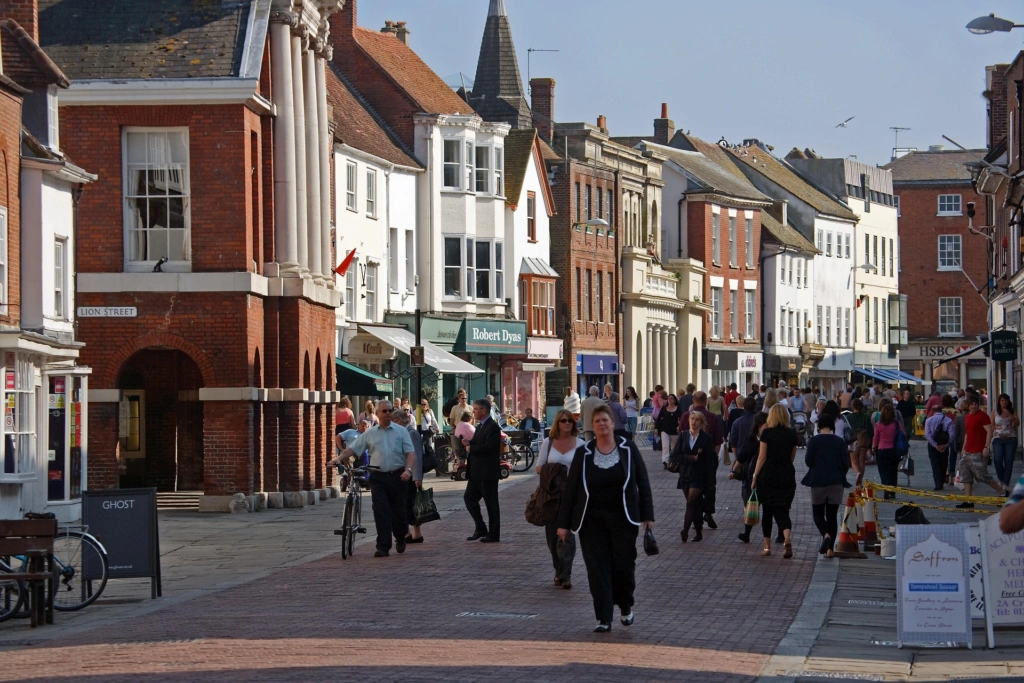
High streets provide a concrete example. The government has already announced proposals for stronger local control over vape shops and gambling premises. A parliamentary answer on 18 November also confirmed an intended consultation on tobacco and vape retail licensing. It would therefore be inaccurate to suggest that ministers have done nothing. The legitimate criticism concerns the distance between announcements, consultation and effective enforcement. We need this to come into force. If the Health Secretary, Yvette Cooper, is to continue to drive improvements in the NHS in the long term, we need to tackle the scourge of these illegal products on our streets causing harm to the health of young people. So instead of opening the Brexit debate, ministers should focus on the issues that matter to people. Licensing needs a clear timetable, workable conditions and sufficient resources for councils and Trading Standards. Responsible retailers should be protected from competitors selling illicit products or ignoring age restrictions. Communities need confidence that enforcement will follow repeated breaches. These are measurable tasks: Inspections completed, illegal products removed and persistent offenders prevented from reopening under another name.
Defending the Realm
Wes Streeting is our Defence Secretary and is already making great strides in preparing the nation’s defences against possible Russian aggression. Defence requires sustained investment, capable procurement and industrial capacity. The government has awarded new shipbuilding contracts to British yards. State procurement going to British firms is essential in this sector. The biggest issue outside of the economy is the defence of the realm. European cooperation can assist parts of this programme, but progress cannot be made conditional on resolving every disagreement with Brussels. But again, it is a question of priorities. Does the Prime Minister want to expend vast amounts of time negotiating micro deals with Brussels, or should he and the Defence Secretary focus on working with British industry to secure our defence, with NATO allies to build resilience and with the private sector to provide the finance, while preparing our own national defence infrastructure?
Protecting Labour’s Record on Immigration
The warning from neglected communities is broader than any single election: Promises lose their value when everyday conditions fail to improve. Conservative governments discovered the limits of ambitious language about regional renewal. Any successor should be judged against the same standard. One area where the Conservatives completely lost control was immigration. Under Labour, net migration is down to a thirty-year low, small boat crossings have been halved and deportations are up. We have a Home Secretary who is delivering on the manifesto in full. If we open up the European debate and commit to returning to the EU, that will mean bringing back freedom of movement, which will completely undo all the great work the Home Secretary has achieved. Free movement is not a priority of the British people. The British people want tougher and firmer border controls, not weaker ones. So again, it is a question of priorities. Do we listen to and deliver for the British people, or do we open our doors to free movement to satisfy the chattering classes in north London?
Keeping the Country United
The UK is facing many challenges, and they require hard work, resilience and grit. Labour won in 2024 precisely because we brought the nation together by closing the door on the Brexit divisions of the past. The Labour government under Keir Starmer and Andy Burnham has achieved so much already. We have more to do, and we face real political threats from the left and right. We need Labour ministers to devote their entire attention and energy to delivering the domestic programme for change that we promised, and not to damage the unity of our country by opening up the Europe debate again.