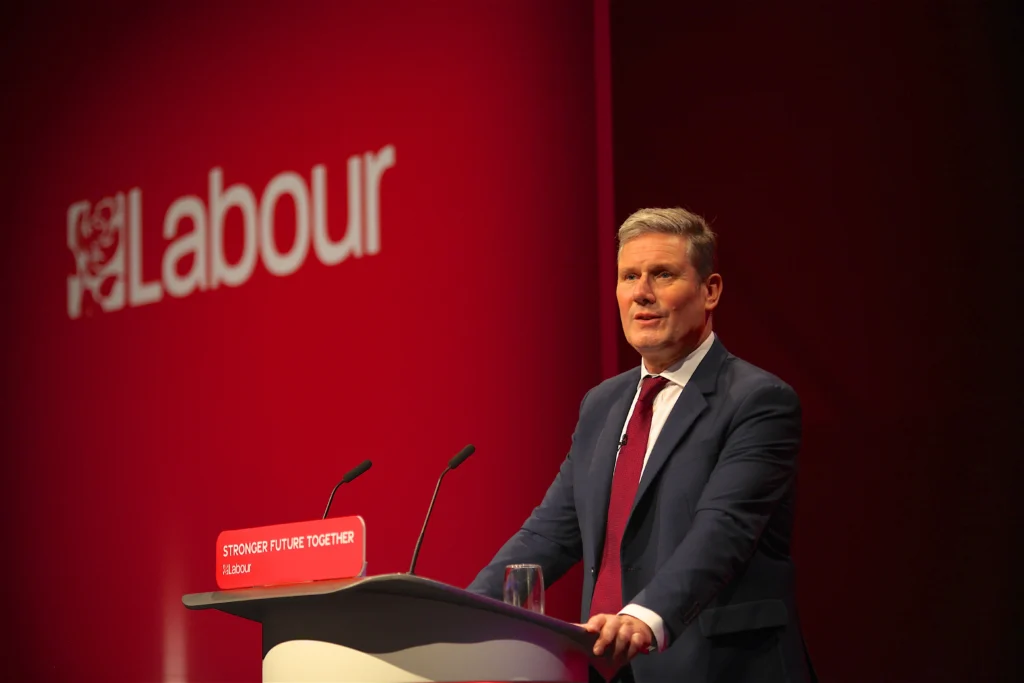
In an increasingly unstable and dangerous world, Britain faces a fundamental strategic question: how can it best advance prosperity, security and democratic values in a shifting global order? The answer for the current Labour government may lie in a project that has steadily gained traction across the Anglosphere. CANZUK is a belief that there should be a closer partnership between Canada, Australia, New Zealand and the United Kingdom, all Commonwealth nations. Pursued with seriousness and guided by Labour values, CANZUK could become one of the most constructive foreign policy initiatives of the coming decades and one of the most powerful forces for growth, security, democracy and progress in the world.
The geopolitical context alone makes the case compelling. The post–Cold War assumption that globalisation and liberal democracy would spread steadily across the world has been shaken by rising authoritarianism, geopolitical rivalry and economic fragmentation. Russia’s invasion of Ukraine, China’s increasingly assertive global posture, and instability across multiple regions have underscored how fragile the international order has become.
At the same time, many traditional alliances are under strain, and economic interdependence is increasingly weaponised. The alliance with the United States has been the cornerstone of UK foreign and security policy but we must assume that the new approach of the United States which is far more transactional and yes, sometimes unreliable and unpredictable is here to stay. In that context, while maintaining a close relationship with the United States, the UK must also seek to develop special relationships with fellow Anglosphere nations.
In such an uncertain environment, democratic states that share deep historical, institutional and cultural ties have an opportunity, and arguably a responsibility, to work more closely together. CANZUK offers precisely that. Canada, Australia, New Zealand and the United Kingdom are among the world’s most stable liberal democracies. They share similar legal systems rooted in common law, strong parliamentary traditions, independent judiciaries, and longstanding commitments to human rights, the rule of law and international cooperation. His Majesty King Charles III is Head of State of all CANZUK nations. The bonds of friendship and family exist, and a more perfect model could not be found than bringing these old friends together. A structured CANZUK partnership could build on these shared foundations through deeper cooperation in three key areas: trade, mobility and security.
A New Engine for Shared Prosperity
Closer economic integration between the four nations could deliver tangible benefits to working people across all member states. The combined CANZUK economies would represent a significant share of global GDP, spans three continents and connecting major resource bases, advanced services sectors and innovation hubs.
The UK is already engaged through the Transpacific Partnership, but this can be enhanced. By reducing regulatory barriers, expanding free trade arrangements and promoting investment, CANZUK could stimulate growth while strengthening supply chain resilience among trusted partners. The combined strength of CANZUK nations in world GDP rankings is between 6.5btrillion and 7.2trillion dollars, ranking alongside the great blocs of the United States, China and the European Union, and is forecast to reach over 12trillion dollars by 2040.
For a Labour government committed to rebuilding Britain’s economy and delivering prosperity that is broadly shared, such economic partnerships are essential. The aim should not be deregulated globalisation of the past, but rather a modern form of economic cooperation that prioritises fair labour standards, environmental responsibility and high-quality jobs. CANZUK offers a framework in which these principles can be embedded, ensuring that economic integration serves the interests of workers as well as businesses.
Deepening People-to-People Ties and Security Cooperation
Enhanced mobility between CANZUK nations could deepen people-to-people ties and expand opportunities for younger generations. Each of the four countries has already demonstrated the benefits of relatively open movement arrangements, particularly through youth mobility schemes.
Expanding these into a broader framework by allowing citizens to live and work more freely across the four countries would strengthen cultural links, address skills shortages and foster shared innovation. The citizens of CANZUK nations are diverse, English speaking, educated and skilled, mobile and entrepreneurial. From a Labour perspective, mobility arrangements must be fair, well-managed and socially responsible. The goal should be reciprocal opportunity, not a race to the bottom. With similar wage levels, labour protections and welfare systems, CANZUK countries are uniquely well positioned to implement such arrangements without the distortions that sometimes accompany migration systems between more unequal economies.
CANZUK could significantly strengthen cooperation on defence and security. The four countries already maintain close military relationships through the Five Eyes intelligence alliance and longstanding defence partnerships. A more formalised CANZUK framework could enhance joint procurement, strategic planning and coordinated responses to emerging threats such as cyber warfare, disinformation and maritime security challenges.
Historically, CANZUK nations have fought together in multiple conflicts and wars and there is a common bond between all forces under the Crown. In a world where authoritarian powers are increasingly challenging democratic norms, cooperation between stable democracies matters. A CANZUK partnership would not replace existing alliances such as NATO, but it could complement them by providing a flexible platform for coordinated action among countries that share not only interests but also political values.
A Progressive Vision
Critically, the pursuit of CANZUK should not be seen as nostalgic or backward-looking. Properly framed, it is not about recreating old imperial relationships but about building a forward-looking democratic partnership for middle ranking powers as articulated by the Prime Minister of Canada. The four nations involved are sovereign equals, each with diverse and multicultural societies, indigenous communities whose voices must be respected, and global outlooks that extend far beyond historical ties.
For Labour, this is where the project must be clearly grounded in progressive values. A CANZUK partnership should champion climate cooperation, sustainable development, and international law. The four countries could coordinate ambitious climate policies, accelerate green technology development and use their combined diplomatic weight to advocate for stronger global environmental action and social progress.
Similarly, CANZUK could become a platform for advancing human rights and democratic governance worldwide. By aligning development assistance, supporting democratic institutions in emerging democracies and advocating for fair international rules, the partnership could act as a constructive force within global institutions such as the United Nations and the World Trade Organization. With the extensive and unparallel educational and cultural reach of all four nations, there is no reason why the CANZUK bloc could not be a major superpower in these fields too.
The world today is marked by fragmentation and uncertainty. Yet it is precisely in such times that durable alliances between democratic societies become most valuable. CANZUK offers the Labour government an opportunity to shape a new kind of partnership—one rooted in shared values, practical cooperation and a commitment to building a fairer, more stable international order. Crucially, there is very little opposition to the notion of CANZUK coming to fruition. Polls have consistently showed that support for CANZUK is extremely high in all four nations. In contrast, the division in the United Kingdom over Brexit strong and divisive and the European argument led to a decade of disputes. CANZUK would not carry that baggage and disagreement because the people in those countries support it overwhelmingly.
If pursued with seriousness and imagination, CANZUK could become more than a diplomatic initiative. Labour needs a bold and imaginative vision for Britain in the modern world. CANZUK could very well be that vision. It could represent a model of how democratic and progressive nations can work together in the twenty-first century: not in pursuit of narrow national advantage or in pursuit of imperial nostalgia, but in service of prosperity, security and justice for their citizens and as a powerful force for good in the wider world. A true beacon of hope and opportunity at a time when the world is becoming darker and less safe.