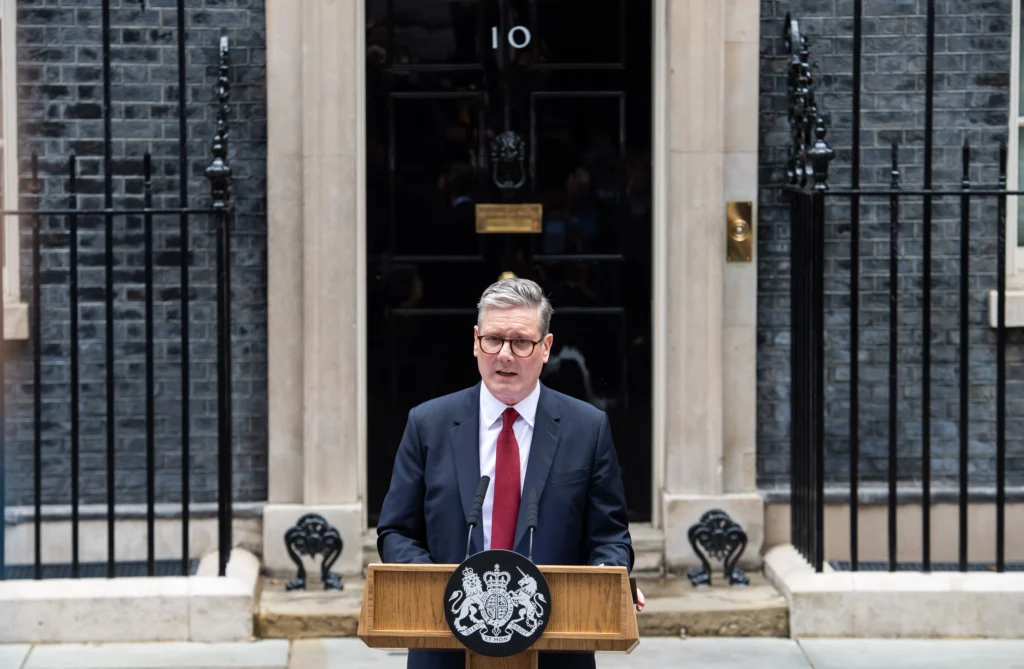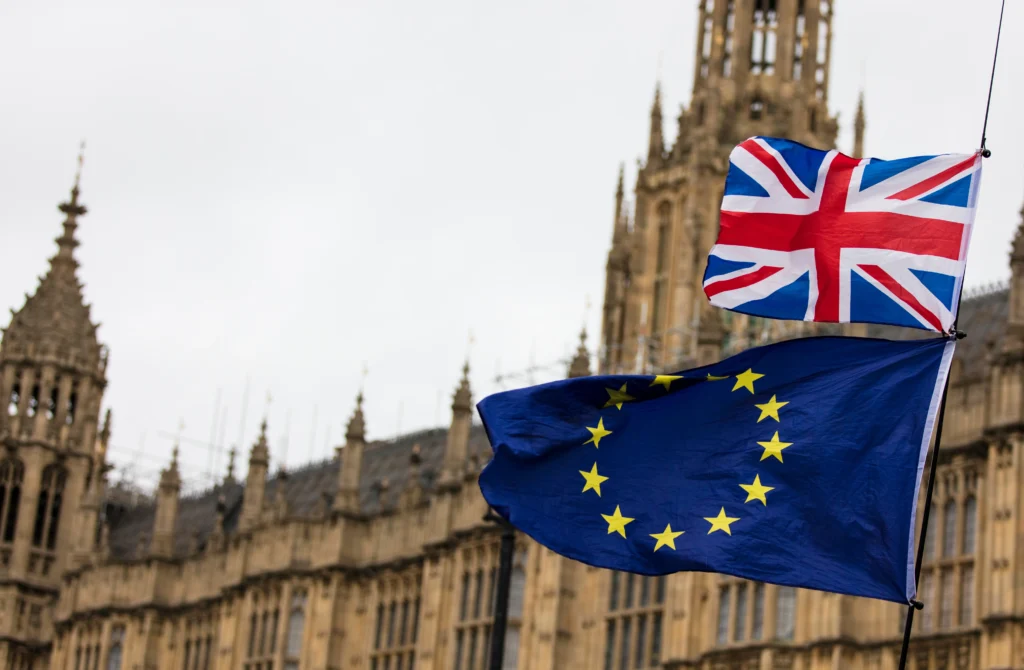
In the 2024 election manifesto and since taking office, the Prime Minister has been clear: Britain will not seek to rejoin the European Union, the Single Market, or the Customs Union and there will be no return to freedom of movement. Instead, the government proposes a more cooperative but fully sovereign relationship with the EU.
Critics from pro-European circles within the Labour movement argue this is too timid, but Labour’s position is sound on strategic, political, and economic grounds. It recognises the need for stability, democratic legitimacy, and long-term economic opportunity at a time when global competition and geopolitical shifts require autonomy and agility. Moreover, despite challenges, the UK has begun to realise the advantages from operating outside EU structures, particularly in trade, regulation, immigration policy, innovation, and diplomacy.
Democratic legitimacy and political stability
A central reason Labour is right to rule out rejoining comes down to democratic legitimacy. For better or worse, Brexit was the largest democratic mandate ever delivered in the UK. 15.2million people voted to leave. Attempting to reverse it would not only reopen deep social fractures but also create years of renewed political upheaval – exactly the opposite of the stability businesses and international partners now want.
At a time when the United States is proving to be an uncertain ally, and with the rise of China and the aggression of Russia; the United Kingdom must be a constant and work for stability and not add to ever growing list of geopolitical crises and challenges.
Rejoining the EU or either of its core economic pillars would require accepting freedom of movement, EU budget contributions, and the jurisdiction of the Court of Justice of the EU. Labour knows that there is no political majority, in Parliament or in the country, for such a reversal, especially on freedom of movement.
A government that tried would become consumed by constitutional turbulence, distracting from urgent domestic priorities like the NHS, cost of living, housing, and industrial renewal. Labour is making a strong move to secure its borders, and if it were to rejoin and bring back freedom of movement that could completely wipe out any credibility the government has built up on securing our borders.
By committing clearly to staying outside the EU framework, Labour provides policy certainty, allowing businesses to plan investment and supply chains rather than living in fear of perpetual renegotiation and disruption.
Independent trade policy: a strategic asset
Rejoining the Customs Union would mean surrendering one of the key strategic assets regained after Brexit: an independent trade policy. The UK would once again be bound by the EU’s Common External Tariff and unable to negotiate its own trade agreements.
Outside the Customs Union, the UK has signed over 70 trade deals, including the comprehensive UK–Japan agreement, deals with the United States, a free trade deal with India, as well as an enhanced relationship with the EU and accession to CPTPP, an 11-country Pacific trade bloc with high-growth markets and advanced digital standards.
The UK has Launched its own Developing Countries Trading Scheme, cutting tariffs to support diversified import markets and global development. No EU member has this level of trade flexibility. Trade has been one of the great success stories of this Labour government, and we must not throw that away.
Regulatory autonomy and innovation
Remaining outside the Single Market allows the UK to design regulation that aligns with its own industrial strategy, competitiveness goals, and innovation priorities. While the government has no interest in sweeping deregulation, targeted reforms outside EU frameworks are already delivering benefits. These include faster approval timelines in life sciences and medicine; a world leading AI governance framework that is more flexible than the EU’s AI Act and is attracting global investment; and financial services reforms such as changes to Solvency II reforms allow the UK to maintain competitiveness in fintech, capital markets, and insurance without waiting for EU consensus.
Given the City’s fundamental importance to the UK economy as Europe’s leading financial hub, the freedom and flexibility in this area is essential. Re-entering the Single Market would require returning to EU regulatory alignment in almost every sector, a major loss of flexibility at a time when economic agility is a core global advantage. Looking at attracting investment more broadly, the EU has proposed the Corporate Resource for Europe (CORE), an annual levy on companies with over €100 million in net turnover, with payments ranging from €100,000 to €750,000 depending on annual turnover. If passed, this legislation represents a new watershed in Brussels overreach, perfectly positioning the UK to take advantage of any companies looking to avoid such a punitive new regime.
There are of course some challenges, not least Northern Ireland’s unique position. The terms of the Windsor Framework mean that enforcing UK legislation in Northern Ireland will face major challenges, owing to the requirement to honour the single market in Northern Ireland. The Tobacco and Vapes Bill is the most high-profile example currently before parliament, but there are others too. The Labour government may wish to examine the Windsor framework in the future.
Immigration policy and border control
One of the clearest benefits of operating outside the EU framework is immigration policy autonomy. The UK’s points-based system allows the government to calibrate visa rules sector by sector, adjusting to national economic needs rather than continent-wide free movement. This enables targeted recruitment in sectors with acute shortages, such as health and social care, and control over low-skilled migration.
Labour’s preference for “managed migration” is impossible within the EU system. Cooperation is still possible in areas such as return agreements, combatting illegal migration and human trafficking gangs and other security measures. While the government is far from achieving secure borders when it comes to small boats, it has made significant progress.
Many feared that outside the EU the UK would be diplomatically isolated. In fact, the UK has strengthened its global posture. The UK, US, and Australia formed AUKUS, one of the most significant security agreements of the century. The pact places the UK front and centre of security in the Indo-Pacific, a region that will define global geopolitics in the 21st century.
The UK’s independent sanctions regime has allowed faster action in foreign-policy crises, including against Russia. Keir Starmer has brought together the coalition of the willing, leading European nations in the defence of Europe and against the Russian threat. Britain continues to be a major player in NATO and the G7, where its global outlook can be exercised free of internal EU compromises. This global strategic reach is harder to maintain from within EU collective frameworks. Nobody can doubt that the UK is a major world power on the global stage and increasing defence spending will only enhance that position.
A pragmatic partnership with Europe
Labour’s approach to relations with the European Union seeks practical cooperation, not reintegration. The UK can pursue veterinary agreements, mutual recognition discussions, security cooperation, research partnerships, and smoother border procedures all without relinquishing sovereignty or re-entering EU institutions. This model offers the best of both worlds: stability and partnership with Europe, alongside autonomy and flexibility. With Europe but not of Europe.
Keir Starmer’s decision not to rejoin the EU, Single Market, or Customs Union is not ideological, it is pragmatic, democratic, and strategically sound. While there is no doubt a significant number of people in the UK would like to re-enter the EU and its institutions, Labours position is the right one for our time and the foreseeable future. It preserves the UK’s freedom to innovate, negotiate, regulate, and govern according to national priorities. Meanwhile, the benefits of being outside the EU from trade flexibility and regulatory autonomy to security partnerships and immigration control are becoming clearer and the country is starting to reap the benefits. Rather than revisiting old battles, the UK can now move forward, confident in its sovereignty and open to the world which is entirely in keeping with the values of the Labour Party as a truly internationalist movement.